

Your mouth and your heart are more connected than you might think.
Cardiovascular disease is the leading cause of death among women in the United States. According to the American Heart Association, 44.1% of U.S. women ages 20 and older—approximately 61.9 million women—are living with some form of cardiovascular disease, including high blood pressure.
Did you know an important part of cardiovascular health is oral biology?
Research has consistently found an association between periodontitis, a chronic inflammatory disease affecting the gums and bone supporting the teeth, and cardiovascular conditions, including coronary heart disease, heart attack, and stroke. Scientists are still investigating whether periodontal disease directly contributes to cardiovascular disease. But growing evidence points to biological connections involving bacteria, inflammation, and the immune system.
Key Takeaways
- Your mouth and heart are biologically connected. Oral bacteria and systemic inflammation are two potential pathways linking periodontal disease and cardiovascular health.
- Periodontitis is associated with cardiovascular disease, including heart attack and stroke, although causation has not been established.
- Treating periodontal disease can improve some inflammatory and cardiovascular risk markers, but its effect on cardiovascular events remains uncertain.
- Cardiovascular health is a women’s health issue throughout adulthood. Hormonal changes during menopause introduce additional questions about how oral and cardiovascular biology interact.
- Oral biology deserves a place in the broader conversation about women’s cardiovascular health and prevention.
How are your mouth and heart connected?
Two important pathways help explain the connection.
1. A pathway through the bloodstream
The mouth contains a complex ecosystem of microorganisms. When periodontal disease develops, inflammation damages the tissues surrounding the teeth. Because these tissues contain many blood vessels, oral bacteria and bacterial components can enter the bloodstream, sometimes during everyday activities such as chewing or brushing.
These episodes of bacterial entry are generally brief, but researchers are investigating whether repeated exposure associated with periodontal inflammation contributes to cardiovascular disease.
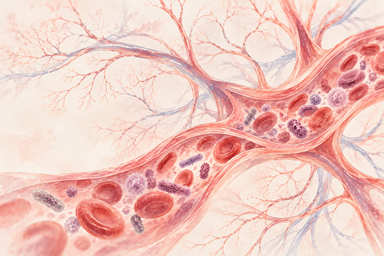
Once in circulation, bacteria can trigger immune responses and potentially affect blood vessels. Researchers have detected evidence of periodontal bacteria in atherosclerotic plaques—the buildup of fatty deposits and inflammatory material inside artery walls.
Scientists are investigating whether these processes contribute to the development or progression of atherosclerosis, which can lead to heart attack and stroke.
2. A pathway through inflammation
Periodontitis isn’t just inflammation in the mouth. People with periodontal disease often have higher levels of inflammatory markers circulating throughout the body, including C-reactive protein (CRP), IL-6, and TNF. CRP is a protein produced by the liver in response to inflammation. Elevated CRP levels can signal inflammation occurring somewhere in the body and are associated with increased cardiovascular risk.

Periodontal inflammation may add to the body’s overall inflammatory burden alongside other conditions and risk factors, including diabetes, high blood pressure, and metabolic dysfunction.
These pathways are interconnected: oral bacteria can activate immune responses, while chronic periodontal inflammation may influence how the body responds to microbial exposure.
Shared risk factors also matter
Periodontal disease and cardiovascular disease share several risk factors, including diabetes, smoking, aging, and metabolic conditions. This makes it difficult to determine how much cardiovascular risk is directly related to periodontal inflammation and how much reflects these shared influences. Understanding these relationships is an important part of ongoing research.
What does the research show?
In a scientific statement published in 2025, the American Heart Association reviewed the growing evidence connecting periodontal disease and cardiovascular health.
Research has found that:
- Periodontitis is associated with cardiovascular disease, including coronary heart disease, heart attack, stroke, and peripheral artery disease.
- People with periodontitis had 42% higher odds of increased carotid artery wall thickness, a marker associated with atherosclerosis. Among those with severe periodontitis, the odds were 70% higher compared with people without periodontal disease.
- Periodontal disease is associated with poorer function of the cells lining blood vessels, which help regulate blood flow, inflammation, and blood pressure.
- Treating periodontal disease can improve some systemic inflammatory markers and may improve certain cardiovascular risk measures.
These findings suggest that periodontal health may be relevant to cardiovascular prevention. However, an association does not establish cause and effect. Researchers have not yet demonstrated that treating periodontitis prevents heart attacks or strokes.
Why does this matter for women’s health?
Cardiovascular disease affects women throughout adulthood, not just after menopause. And the relationship between oral biology and cardiovascular health deserves attention across women’s lives. Periodontal inflammation, oral bacteria, and immune responses may interact with cardiovascular processes regardless of hormonal stage. Understanding these connections could help researchers identify additional factors that contribute to women’s cardiovascular risk.
Menopause & heart health
As estrogen declines, changes occur throughout the body, including in blood vessels, metabolism, bone, and inflammatory regulation. The mouth is also hormonally responsive. Changes associated with menopause can affect periodontal tissues, bone supporting the teeth, saliva, and the oral microbiome. These changes may overlap with increasing cardiovascular and metabolic risk during midlife. Periodontal disease may add to the overall inflammatory burden during a period when multiple biological systems are changing.
But important questions remain unanswered.
- Does periodontal inflammation contribute differently to cardiovascular risk before, during, and after menopause?
- How do hormonal changes influence these connections?
- Could identifying and treating periodontal inflammation improve cardiovascular risk markers in women?
More research is needed to understand these interactions and determine whether incorporating oral biological measures into women’s cardiovascular research could improve prevention.
Can treating periodontal disease benefit your heart?
Recent systematic reviews and meta-analyses suggest that treating periodontitis can reduce some markers of systemic inflammation, including C-reactive protein (CRP), and may improve certain cardiovascular risk measures. However, findings vary across studies, and more research is needed to determine whether these improvements translate into fewer heart attacks, strokes, or other cardiovascular events.
Maintaining periodontal health is important. If you have both periodontal disease and a heart condition, make sure to inform your dentist and medical provider. Periodontal treatment should be an addition to established cardiovascular prevention or treatment, not a replacement.
Things you can do to support heart health
Supporting your oral biology is one part of caring for your whole-body health.
- Pay attention to bleeding gums. Regular bleeding, swelling, or tenderness can be signs of inflammation that shouldn’t be ignored.
- Treat periodontal disease. If you have periodontitis, work with your dental provider to manage inflammation and prevent further tissue damage.
- Connect your care. Tell your medical providers if you have periodontal disease, particularly if you also have cardiovascular or metabolic conditions.
- Know your cardiovascular risk factors. Blood pressure, cholesterol, blood glucose, smoking, and other established risk factors remain central to prevention.
- Maintain regular oral care: Brush twice daily, floss daily, and schedule regular dental appointments.
- Support your oral environment. Explore products designed to support healthy gums and oral microbial balance as part of a consistent oral-care routine.
Sources
- American Heart Association. 2026 Heart Disease and Stroke Statistics Update: U.S. Females and Cardiovascular Diseases Fact Sheet. AHA Fact Sheet.
- Tran AH, Zaidi AH, Bolger AF, et al. Periodontal Disease and Atherosclerotic Cardiovascular Disease: A Scientific Statement From the American Heart Association. Circulation. 2026;153(6):e73-88. doi:10.1161/CIR.0000000000001390.
- Rydén L, Buhlin K, Ekstrand E, et al. Periodontitis increases the risk of a first myocardial infarction: a report from the PAROKRANK study. Circulation. 2016;133:576–583. doi:10.1161/CIRCULATIONAHA.115.020324.
- Ding L, You Q, Jiang Q, Cao S, Jiang S. Meta-analysis of the association between periodontal disease, periodontal treatment and carotid intima-media thickness. Journal of Periodontal Research. 2022;57:690–697. doi:10.1111/jre.13006.
- Hajishengallis G, Chavakis T. Local and systemic mechanisms linking periodontal disease and inflammatory comorbidities. Nature Reviews Immunology. 2021;21:426–440. doi:10.1038/s41577-020-00488-6.
- Shi R, Jamieson L, Nath S. Does non-surgical periodontal therapy improve biomarkers associated with cardiovascular disease? An umbrella review. Clinical Oral Investigations. 2025;30(1):10. doi:10.1007/s00784-025-06697-4.
- Gandhi KK, Batra C, Affendi H. Cardiovascular and anti-inflammatory effects of periodontal therapy: A systematic review and meta-analysis of randomized trials. Journal of Periodontology. Published online July 4, 2026. doi:10.1002/jper.70162.
- Lyu J, Zhang Y, Zhou R, et al. The effect of periodontal treatments on endothelial function in degrees of periodontitis patients: A systematic review and meta-analysis. PLOS ONE. 2024;19(9). doi:10.1371/journal.pone.0308793.
- Ye Z, Cao Y, Miao C, et al. Periodontal therapy for primary or secondary prevention of cardiovascular disease in people with periodontitis. Cochrane Database of Systematic Reviews. 2022;10. doi:10.1002/14651858.CD009197.pub5.