

Part 1 of the Inflammation & Women’s Health Series
Inflammation gets a bad reputation. But did you know your body actually needs it?
When you get a cut, fight an infection, or recover from an injury, inflammation helps your body protect itself and heal. It’s one of the ways your immune system keeps you healthy. Problems can develop when inflammation continues longer than it should. Over time, ongoing inflammation can damage healthy tissues and contribute to chronic disease. And because your immune system works throughout your body, inflammation isn’t just about one organ or one condition.
Key Takeaways
What is inflammation?
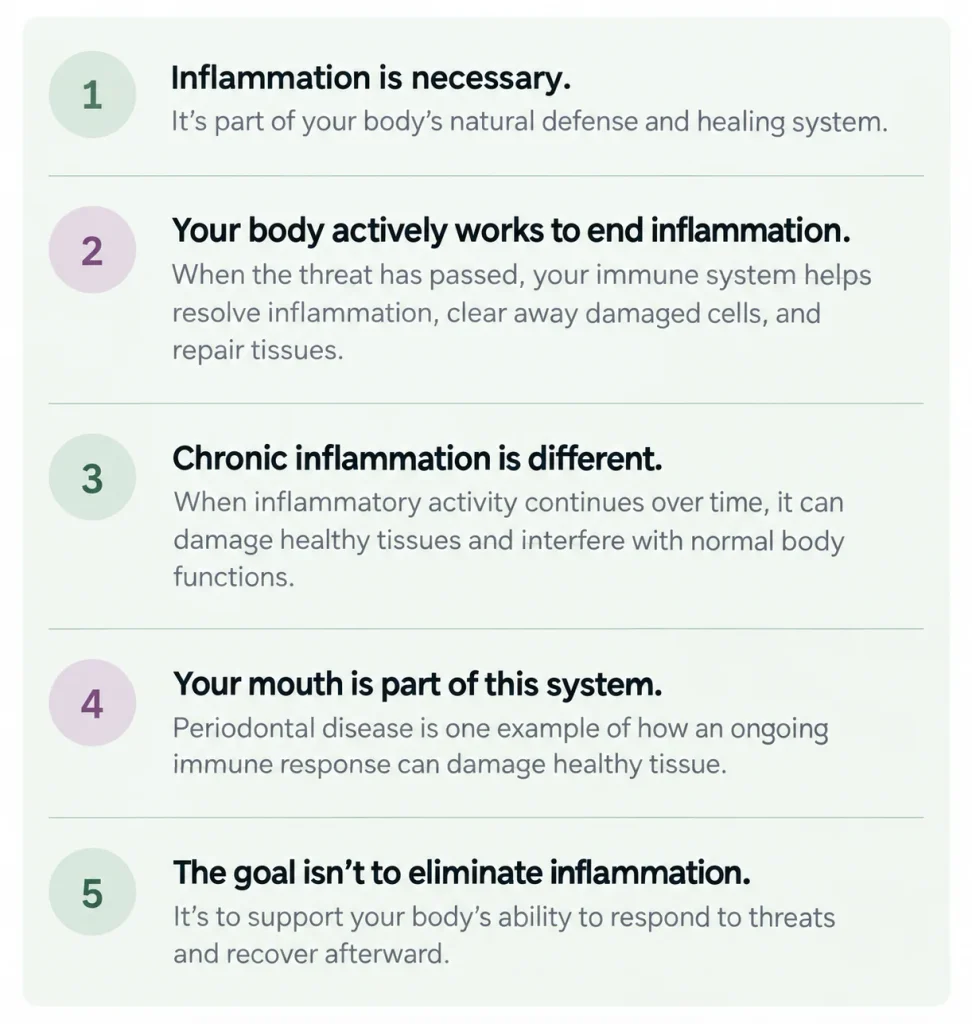
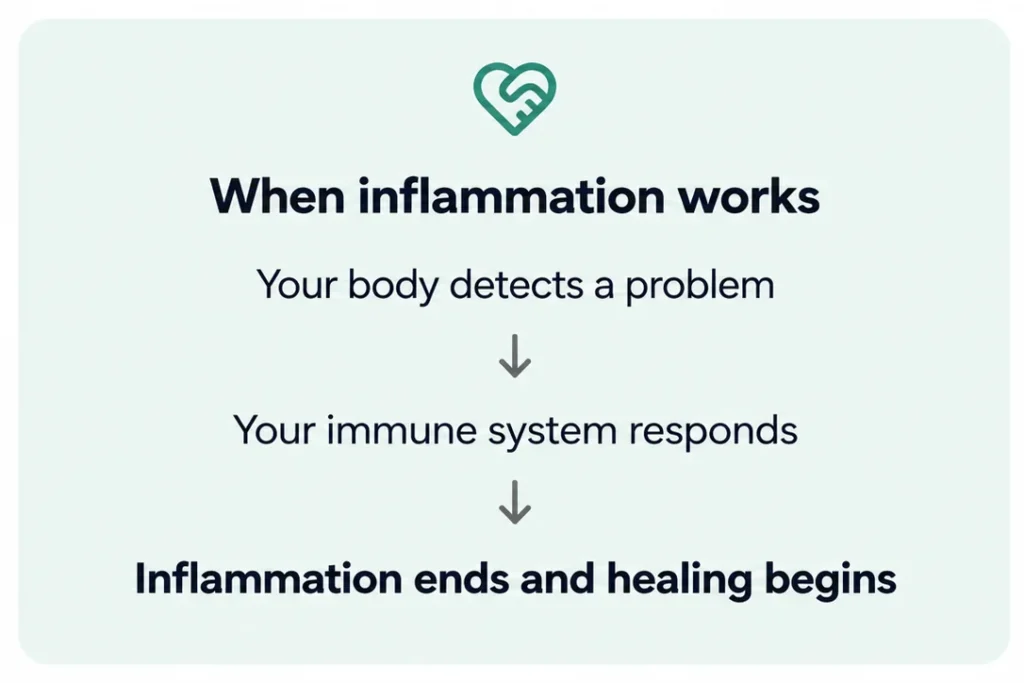
Inflammation is your body’s response to injury, infection, or other threats. When your immune system detects a problem, it sends immune cells and chemical signals to the affected area to fight germs, remove damaged cells, and begin healing. This is called acute inflammation. It’s usually short-lived, like the redness and swelling around a small cut.
When the threat has passed, your body actively works to end inflammation, clear away damaged cells, and repair tissues. Scientists call this the resolution of inflammation.
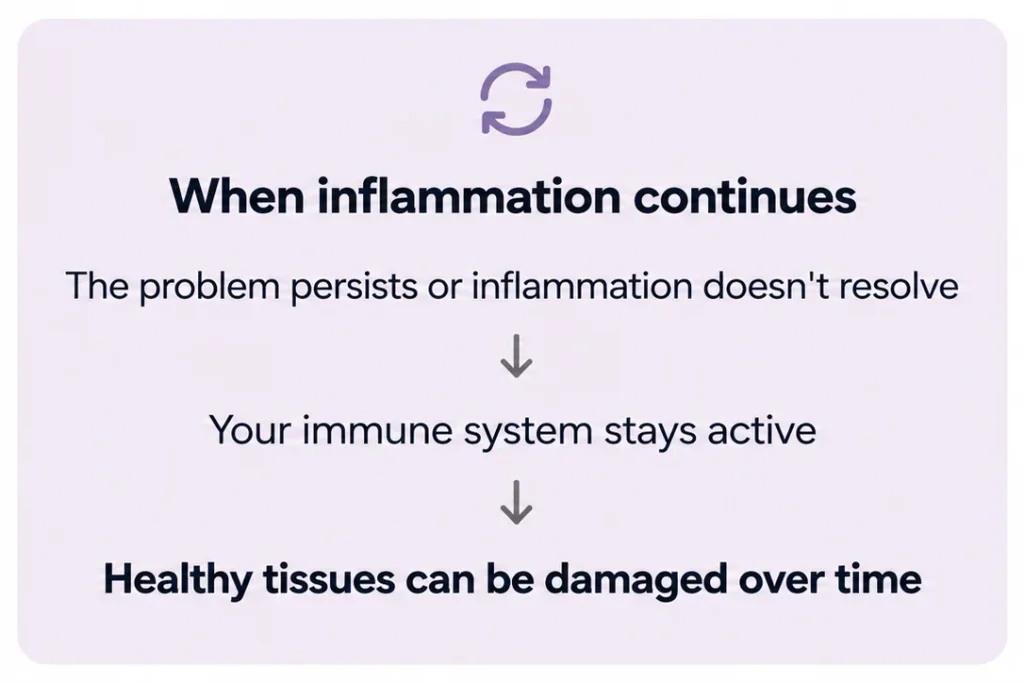
But sometimes inflammation continues for months or years. This is called chronic inflammation. It can happen when the immune system keeps responding to an ongoing problem or has difficulty bringing the response to an end. Over time, chronic inflammation can damage healthy tissues.
Inflammation: When It Helps & When It Hurts
Why does chronic inflammation matter?
Your immune system doesn’t work in isolation. It interacts with your blood vessels, metabolism, bones, and many other parts of your body. Chronic inflammation plays a role in conditions such as cardiovascular disease, diabetes, rheumatoid arthritis, and periodontal disease.
But inflammation doesn’t work the same way in every condition. Different diseases involve different immune cells, chemical signals, and biological processes. And finding inflammation in two conditions doesn’t necessarily mean one caused the other. Throughout this series, “linked” means that two things are associated with one another, they show up together. It does not mean that one causes the other.
Your oral microbiome and inflammation
Your mouth is home to a community of bacteria and other microbes called the oral microbiome. Most are a normal part of a healthy mouth, and your immune system interacts with them every day. When this microbial community becomes unbalanced, it can contribute to inflammation around the gums. But the relationship also works in reverse: ongoing inflammation changes the oral environment, creating conditions that favor certain microbes and fuel further inflammation.
This cycle can contribute to periodontitis, a chronic inflammatory disease that damages the gums and bone supporting your teeth. Much of that damage results from the body’s own ongoing immune response. Periodontitis shows how inflammation and microbial imbalance can reinforce each other, eventually damaging the tissues the immune system is meant to protect.
What Can You Do?
You don’t need to eliminate inflammation. Instead, focus on supporting your body’s ability to respond to threats and recover.
- Move your body regularly. Find physical activities you enjoy and make them part of your routine.
- Prioritize sleep. Give your body the rest it needs to recover and function well.
- Eat a balanced diet. Include a variety of fruits, vegetables, whole grains, and other nutrient-rich foods.
- Avoid tobacco. Smoking and other tobacco use can contribute to chronic inflammation.
- Manage existing health conditions. Follow recommended care plans to help keep conditions under control.
- Pay attention to changes in your body. Persistent gum bleeding, swelling, or other unusual symptoms are worth discussing with a healthcare professional.
Remember: Inflammation is part of staying healthy. The challenge begins when the response doesn’t settle down.
Next up: Part 2 – How Inflammation in Your Mouth is Connected to the Rest of Your Body?
Research Supporting This Article
- Medzhitov R. Origin and physiological roles of inflammation. Nature. 2008;454:428–435. https://doi.org/10.1038/nature07201
- Van Dyke TE, Sima C. Understanding resolution of inflammation in periodontal diseases: Is chronic inflammatory periodontitis a failure to resolve? Periodontology 2000. 2020;82:205–213. https://doi.org/10.1111/prd.12317
- Furman D, Campisi J, Verdin E, et al. Chronic inflammation in the etiology of disease across the life span. Nature Medicine. 2019;25:1822–1832. https://doi.org/10.1038/s41591-019-0675-0
- Kinane DF, Stathopoulou PG, Papapanou PN. Periodontal diseases. Nature Reviews Disease Primers. 2017;3:17038. https://doi.org/10.1038/nrdp.2017.38
- Hajishengallis G. The inflammophilic character of the periodontitis-associated microbiota. Molecular Oral Microbiology. 2014;29(6):248–257. https://doi.org/10.1111/omi.12065
- Hajishengallis G, Chavakis T, Lambris JD. Current understanding of periodontal disease pathogenesis and targets for host-modulation therapy. Periodontology 2000. 2020. https://doi.org/10.1111/prd.12331
- Baima G, Arce M, Romandini M, Van Dyke TE. Inflammatory and immunological basis of periodontal diseases. Journal of Periodontal Research. 2025. https://doi.org/10.1111/jre.70040