

Brain health is a women’s health issue.
Nearly two-thirds of Americans living with Alzheimer’s disease are women. While age is the greatest risk factor, researchers are investigating how inflammation, metabolism, vascular health, hormonal changes, and other biological processes influence cognitive health throughout life.
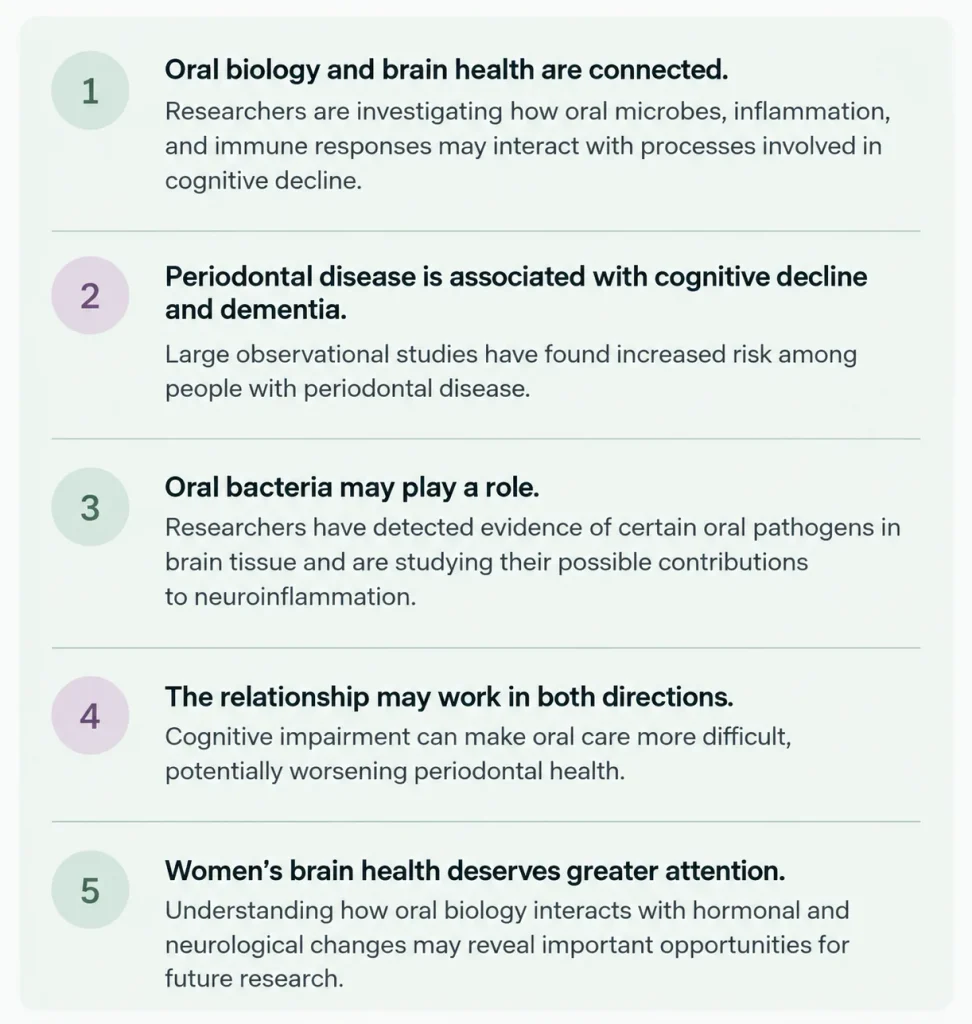
One area receiving growing scientific attention is oral biology. Studies have found associations between periodontal disease, tooth loss, cognitive decline, and dementia. Scientists are investigating whether oral bacteria and chronic inflammation contribute to changes in the brain, although a direct cause-and-effect relationship has not been established.
Key Takeaways
How are your mouth and brain connected?
Your mouth is home to a community of microbes that interacts with your gums and immune system. When that balance is disrupted, it can lead to long-lasting inflammation and gum disease. Researchers are studying several ways this might connect to brain health. These are still open questions, not proven links.
1. Inflammation
Inflammation is how your body defends itself. When it doesn’t switch off, it can affect tissues throughout your body. Periodontitis, a long-term inflammatory disease of the gums and the bone that supports your teeth, is linked to higher levels of inflammation in the blood. Researchers are asking whether this extra inflammation affects the brain and the processes behind memory and thinking decline.
2. Oral bacteria
When your gums are inflamed, bacteria from your mouth can enter your bloodstream. Scientists are studying whether some of them, or pieces of them, can reach the brain or affect it through the immune system.
One bacterium getting attention is Porphyromonas gingivalis, which is linked to gum disease. It has been found in brain tissue from people with Alzheimer’s disease. That’s intriguing, but it doesn’t show that it causes Alzheimer’s. Most of the evidence on how it might work comes from lab and animal studies, so we don’t yet know whether this happens in people.
3. Blood vessel health
Your brain depends on blood vessels to deliver oxygen and nutrients, so heart and blood vessel health is closely tied to memory and thinking. High blood pressure, diabetes, and hardened arteries can reduce blood flow to the brain and raise the risk of thinking problems.
Gum disease has also been linked to inflammation, poorer blood vessel function, and cardiovascular disease. Researchers are asking whether these overlapping processes help explain the link between gum disease and brain health.
What does the research show?
A growing body of research has identified associations between periodontal disease and cognitive outcomes.
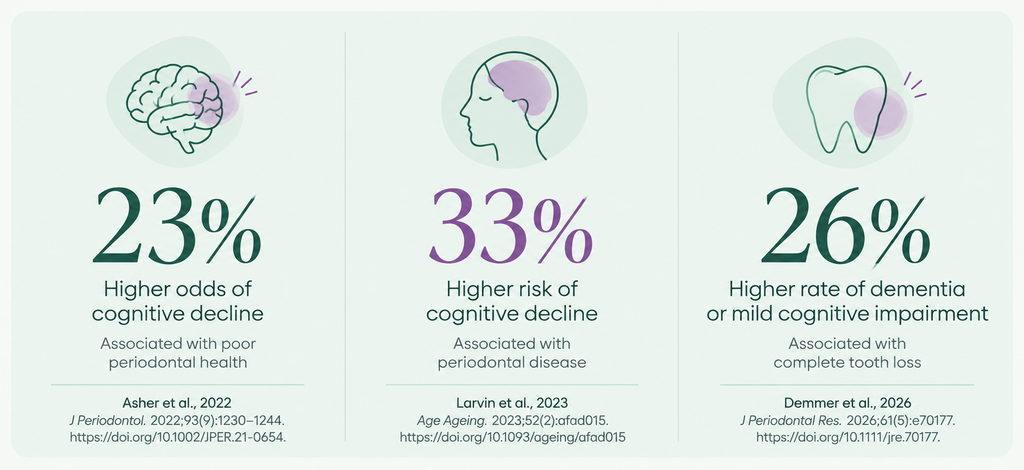
These findings strengthen evidence of an association, but they do not establish that periodontal disease causes cognitive decline. Shared risk factors, including aging, smoking, diabetes, cardiovascular disease, and socioeconomic conditions, may contribute to both oral and cognitive outcomes.
Why does this matter for women’s health?
Alzheimer’s disease disproportionately affects women. In the United States, approximately 4.5 million women age 65 and older are living with Alzheimer’s dementia. Women’s brain health is influenced by a complex interaction of aging, genetics, cardiovascular and metabolic health, immune function, and hormonal changes. Oral biology belongs in this broader conversation.
Because the mouth is hormonally responsive, its tissues, microbial communities, saliva, and immune environment can change throughout a woman’s life. Understanding whether these changes interact with neurological and systemic processes, especially during perimenopause and menopause could help researchers better understand women’s cognitive health and identify additional opportunities for prevention.
For women, these questions deserve particular attention:
- Do changes in oral inflammation during menopause interact with processes affecting brain health?
- Are certain oral microbial patterns associated with cognitive changes during or after menopause?
- Could oral biological measures provide additional information about inflammation or neurological risk?
- Would incorporating oral biology into longitudinal menopause research help clarify these relationships?
We do not yet have sufficient evidence to answer these questions. But understanding women’s brain health requires studying the biological systems that change throughout their lives, including those that have historically been examined separately, like oral biology.
Things you can do to support brain health
Supporting your oral biology is one part of caring for your whole-body health.
- Pay attention to gum inflammation. Persistent bleeding, swelling, or tenderness can indicate inflammation.
- Support your oral microbiome. Brush twice daily, floss, and schedule regular dental cleanings.
- Treat periodontal disease. Work with your dental provider to manage inflammation and protect the tissues supporting your teeth.
- Protect your cardiovascular and metabolic health. Managing blood pressure, cholesterol, diabetes, and other established risk factors also supports brain health.
- Support healthy aging. Regular physical activity, adequate sleep, nutritious eating, and social engagement are important parts of maintaining cognitive health.
- Connect your care. Make sure your healthcare providers know about periodontal disease, especially if you have cardiovascular, metabolic, or neurological conditions.
Sources & Further Reading
Periodontal Disease, Cognitive Decline & Dementia
- Demmer RT, et al. (2026). Periodontitis, Tooth Loss, and Risk of Cognitive Impairment and Dementia: A Systematic Review With Meta-Analysis. Journal of Periodontal Research. Read study
- Asher S, et al. (2022). Periodontal health, cognitive decline, and dementia: A systematic review and meta-analysis of longitudinal studies. Journal of the American Geriatrics Society. Read study
- Larvin H, et al. (2023). The impact of study factors in the association of periodontal disease and cognitive disorders: Systematic review and meta-analysis. Age and Ageing. 52(2):afad015. Read study
- Kim DH, Han GS. (2025). Periodontitis as a risk factor for dementia: A systematic review and meta-analysis. Journal of Evidence-Based Dental Practice. 25(2):102094. Read study
Biological Connections: Inflammation & Oral Microorganisms
- Dominy SS, et al. (2019). Porphyromonas gingivalis in Alzheimer’s disease brains: Evidence for disease causation and treatment with small-molecule inhibitors. Science Advances. 5(1). Read study
- Hajishengallis G, Chavakis T. (2021). Local and systemic mechanisms linking periodontal disease and inflammatory comorbidities. Nature Reviews Immunology. 21:426–440. Read study
Alzheimer’s Disease: Research & Public Health
- National Institute on Aging. (2023). Oral Health and Alzheimer’s and Related Dementias Workshop. Find workshop materials
- Alzheimer’s Association. (2026). 2026 Alzheimer’s Disease Facts and Figures. View report