
Why your mouth may feel drier in midlife
Maybe your mouth feels dry or sticky, you’re reaching for water more often, or food doesn’t taste quite the way it used to. Saliva is easy to overlook until something changes. And it does far more than keep your mouth moist.
It protects your teeth and oral tissues, helps you eat and swallow, and shapes the environment where your oral microbiome lives. This page explains what saliva does, what can change it, and what to do if you notice a difference.
Key Takeaways
- Your saliva supports everyday functions like eating and swallowing, and helps protect your teeth and oral tissues.
- Your saliva is part of a constantly changing ecosystem that includes your oral tissues and microbiome.
- Medications, menopause and other hormonal changes, hydration, oral inflammation, and health conditions can all affect your saliva.
- Saliva contains biological information, but finding something in it doesn’t automatically tell us what it means for your health.
What is saliva?
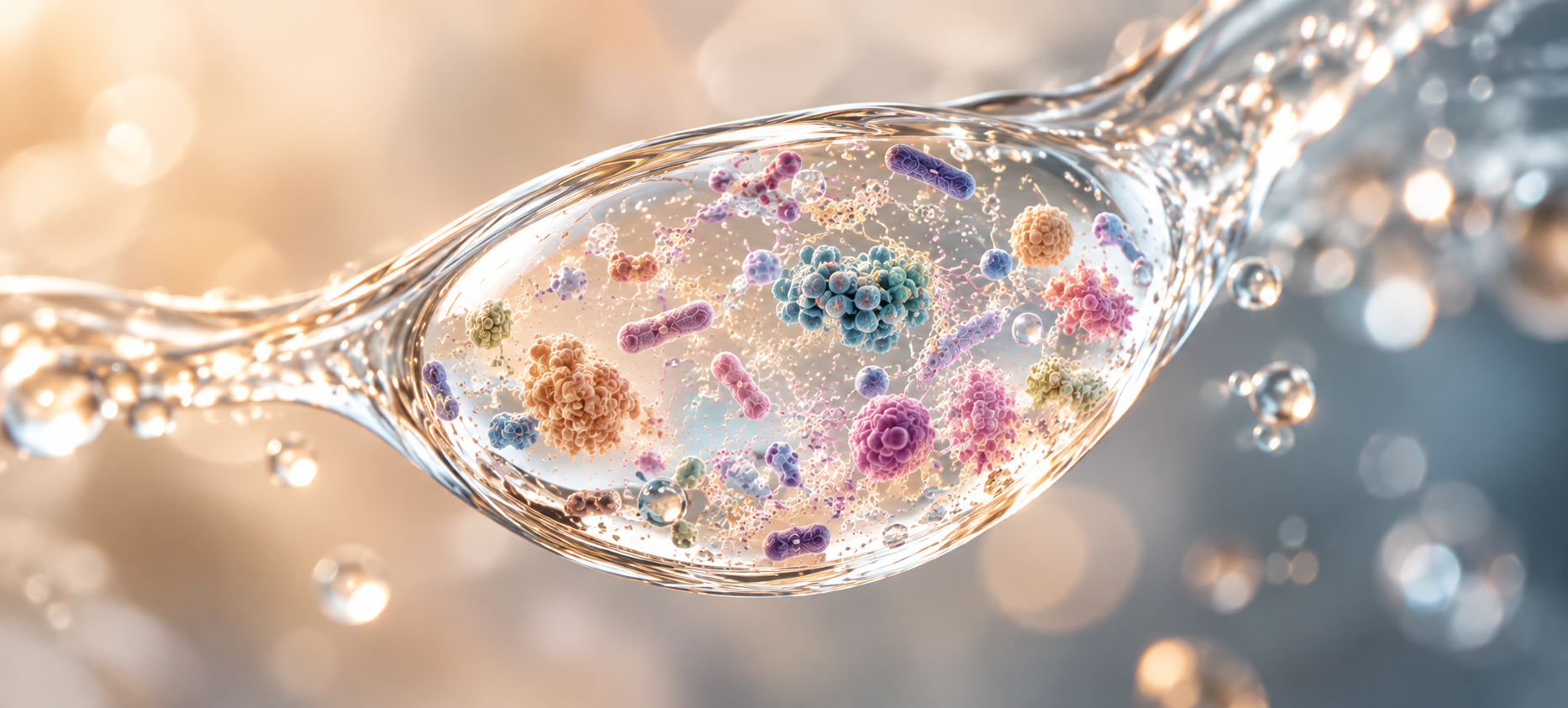
Saliva is a mix of fluid from your salivary glands and gumline, plus cells shed from the lining of your mouth, microbes, and proteins.
Every day, it:
- Moistens your mouth and helps you speak, chew, swallow, and taste
- Rinses away food and other material from surfaces in your mouth
- Neutralizes acids that can wear down your teeth
- Helps maintain the mineral balance that keeps your teeth strong
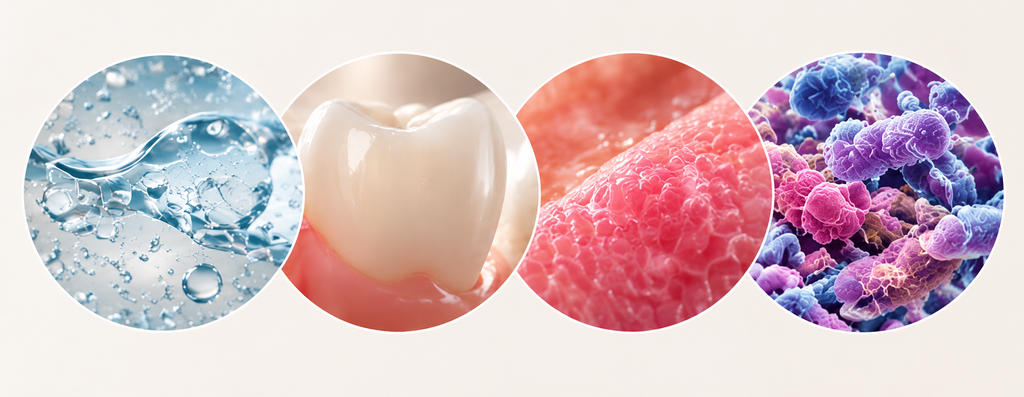
Saliva is also part of the environment where your oral microbiome lives. Your oral microbiome is the community of bacteria and other microbes in your mouth, and hundreds of species live on your teeth, gums, tongue, and other surfaces. Your saliva, oral tissues, microbes, and the substances they produce all work together as a constantly changing ecosystem that impacts health.
What does the research show?
Your saliva isn’t the same as anyone else’s, and it isn’t even the same from morning to evening.
Research points to three factors that matter especially at midlife:
- Menopause and other hormonal transitions can cause dry mouth.
- Medications are an important factor. Many commonly used drugs can cause dry mouth or reduced saliva production, especially in older adults.
- Cancer treatment, particularly radiation to the head and neck

Many other things can also change how much saliva you have or what it’s made of:
Your body
- Medical conditions
- Hormonal changes
- Medications
- Inflammation around the gums
Other Factors
- Hydration
- Stress
- Oral hygiene
- Time of day
- Eating and drinking
- Smoking
What does this mean for you?
Changes in your saliva can affect the environment around your teeth, gums, oral tissues, and oral microbiome. There can be several possible contributors to dry mouth, including medications, hydration, hormonal changes, and health conditions. It helps to note when the change started and what else was different at the time, such as a new medication, a new medical condition a stressful stretch, or a shift in your cycle or menopause symptoms.
Things to consider
- Chew xylitol gum
- Add a bedside humidifier
- Visit KaiAvora’s store to learn more about products shown to improve dry mouth.
- Mention persistent dry mouth to your dentist or medical provider.
- Ask your dentist, doctor, or pharmacist whether any of your medications could be a factor.
When to talk to your medical provider or dentist
Changes in your saliva can affect the environment around your teeth, gums, oral tissues, and oral microbiome. You know your body. If you experience a persistent change, it may be worth mentioning to your doctor even if it seems small.
Things to notice
- Dry mouth that doesn’t go away
- A change in how your mouth feels or tastes
- Needing more water than usual
Keep Exploring
[What Saliva Testing Can—and Can’t—Tell You →] What saliva tests can and can’t tell you about your health.
Sources
- Nonaka T, Wong DTW. Saliva diagnostics. Annual Review of Analytical Chemistry. 2022;15(1):107–121. doi:10.1146/annurev-anchem-061020-123959.
- Song M, Bai H, Zhang P, Zhou X, Ying B. Promising applications of human-derived saliva biomarker testing in clinical diagnostics. International Journal of Oral Science. 2023;15(1):2. doi:10.1038/s41368-022-00209-w.
- Deo PN, Deshmukh R. Oral microbiome: unveiling the fundamentals. Journal of Oral and Maxillofacial Pathology. 2019;23(1):122–128. doi:10.4103/jomfp.jomfp_304_18.
- Butera A, Maiorani C, Scribante A, et al. Oral health across the menopausal transition: biological pathways, clinical implications, and future perspectives. Journal of Clinical Medicine. 2026;15(15):5757.
- Tan ECK, et al. Medications that cause dry mouth as an adverse effect in older people: a systematic review and meta-analysis. Journal of the American Geriatrics Society. 2018;66(1):76–84. doi:10.1111/jgs.15151